
Bait Collection Around Ireland: A Shore Angler's Guide
Where, when and how to gather lugworm, ragworm, peeler crab, razor clams and more on Irish shores, plus how to keep bait alive and stay safe.
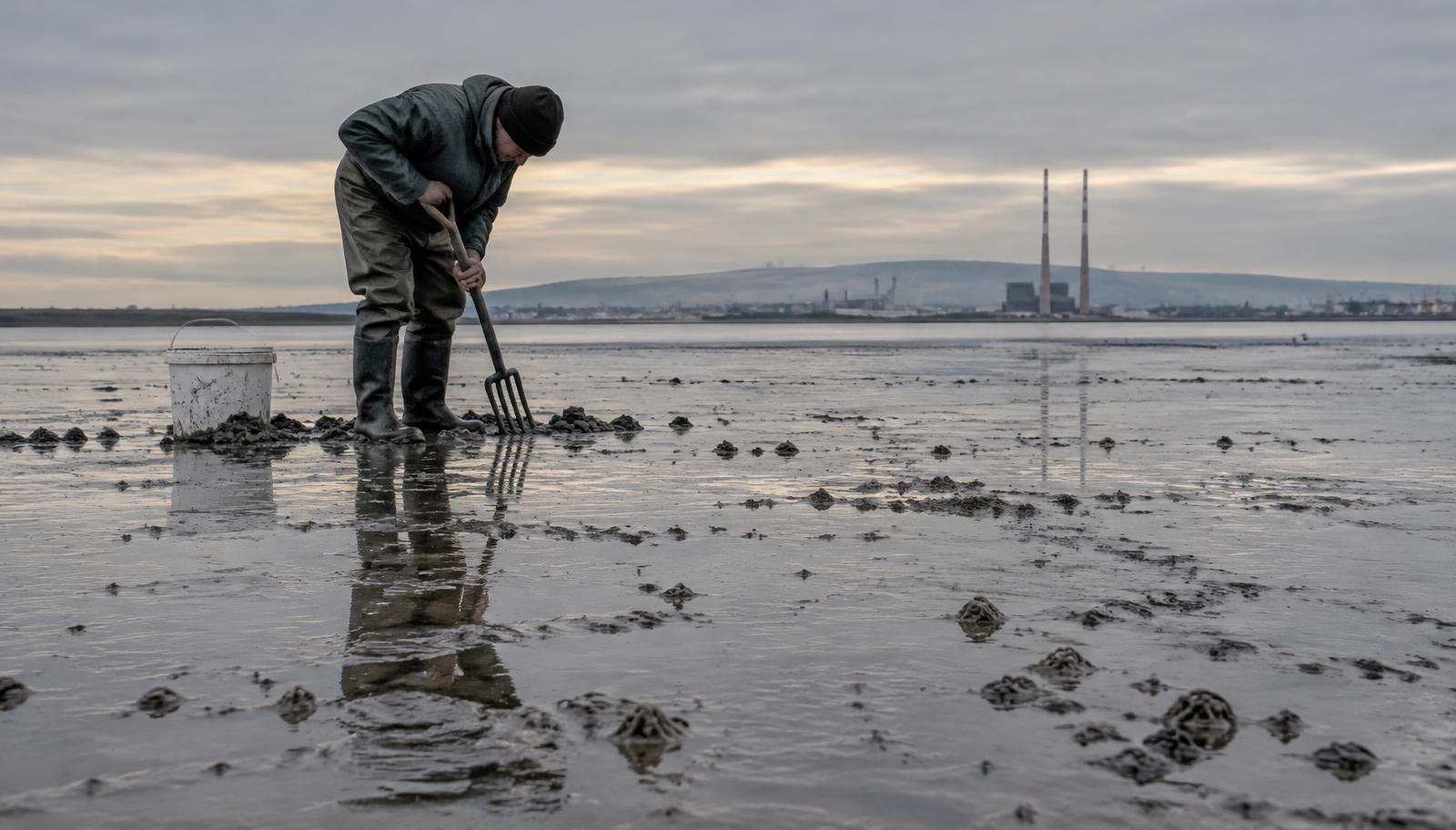
Fresh bait you've gathered yourself is often the single biggest edge a shore angler has. A lugworm dug an hour before the flood or a crab peeled on the rocks that morning will outfish frozen bait on most Irish marks. Collecting it well means reading the shore, timing the tide and leaving the beds in good shape for next time.
This guide covers the main baits found around the Irish coast, where and when to look for them, how to gather them, and how to keep them alive. The seasons and locations are general starting points, not guarantees. Beds move, and local conditions vary from one bay to the next.
The baits worth gathering
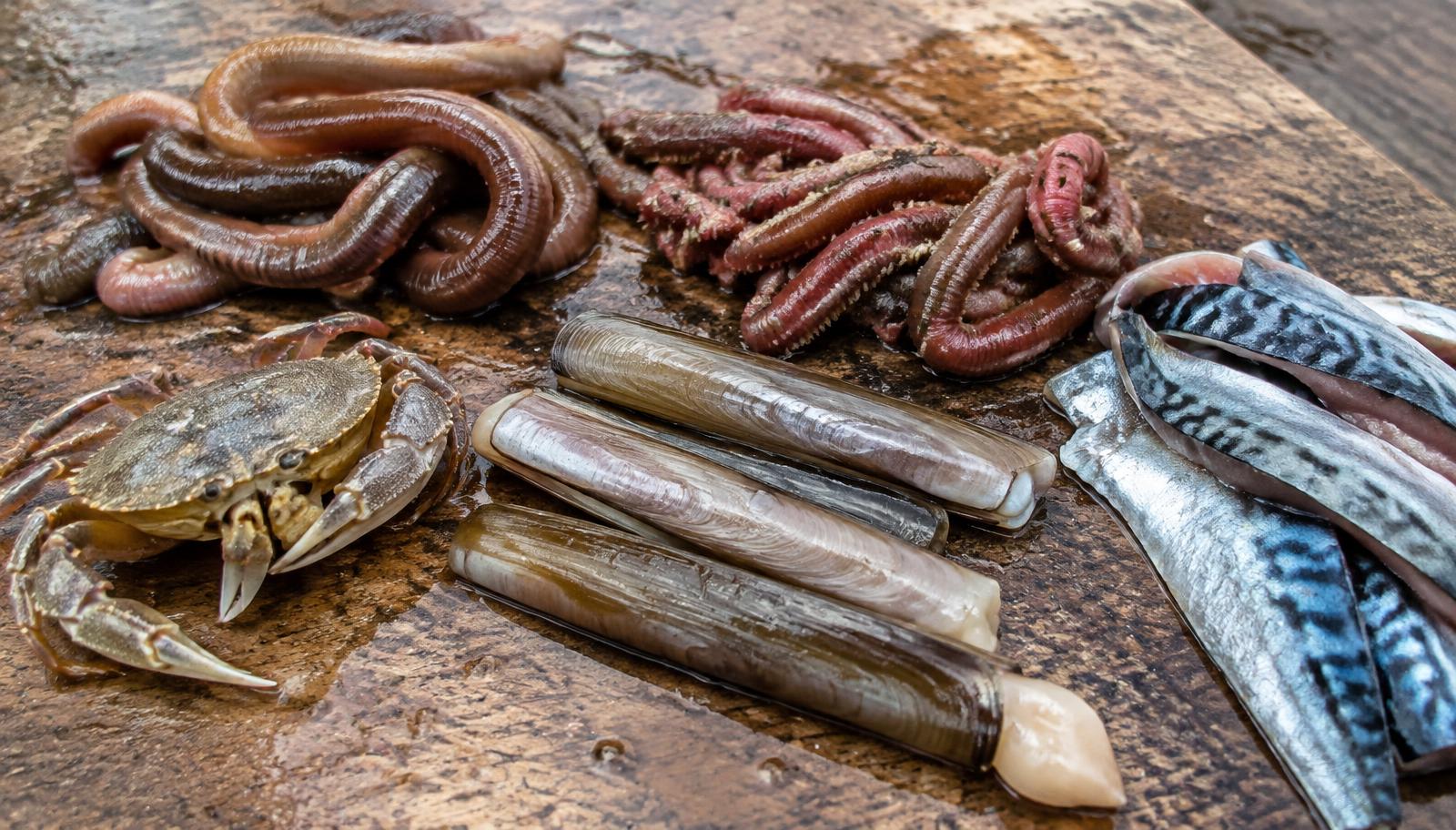
- Lugworm: the standard all-round bait for flatfish, codling, whiting and bass.
- Ragworm: tough and lively. Good for wrasse, pollack, flounder and mullet, and on the float.
- Peeler and soft crab: the top bait for bass, flounder and smoothhound from late spring through summer.
- Razor clam: a big-tide bait loved by bass, cod and flatfish, especially after a storm.
- Mussels, limpets and slipper limpets: free, easy to find, and good for wrasse and coalfish.
- Mackerel and sandeel: caught rather than dug, but they're the backbone of summer bait for rays, dogfish, conger and bass.
Reading the shore
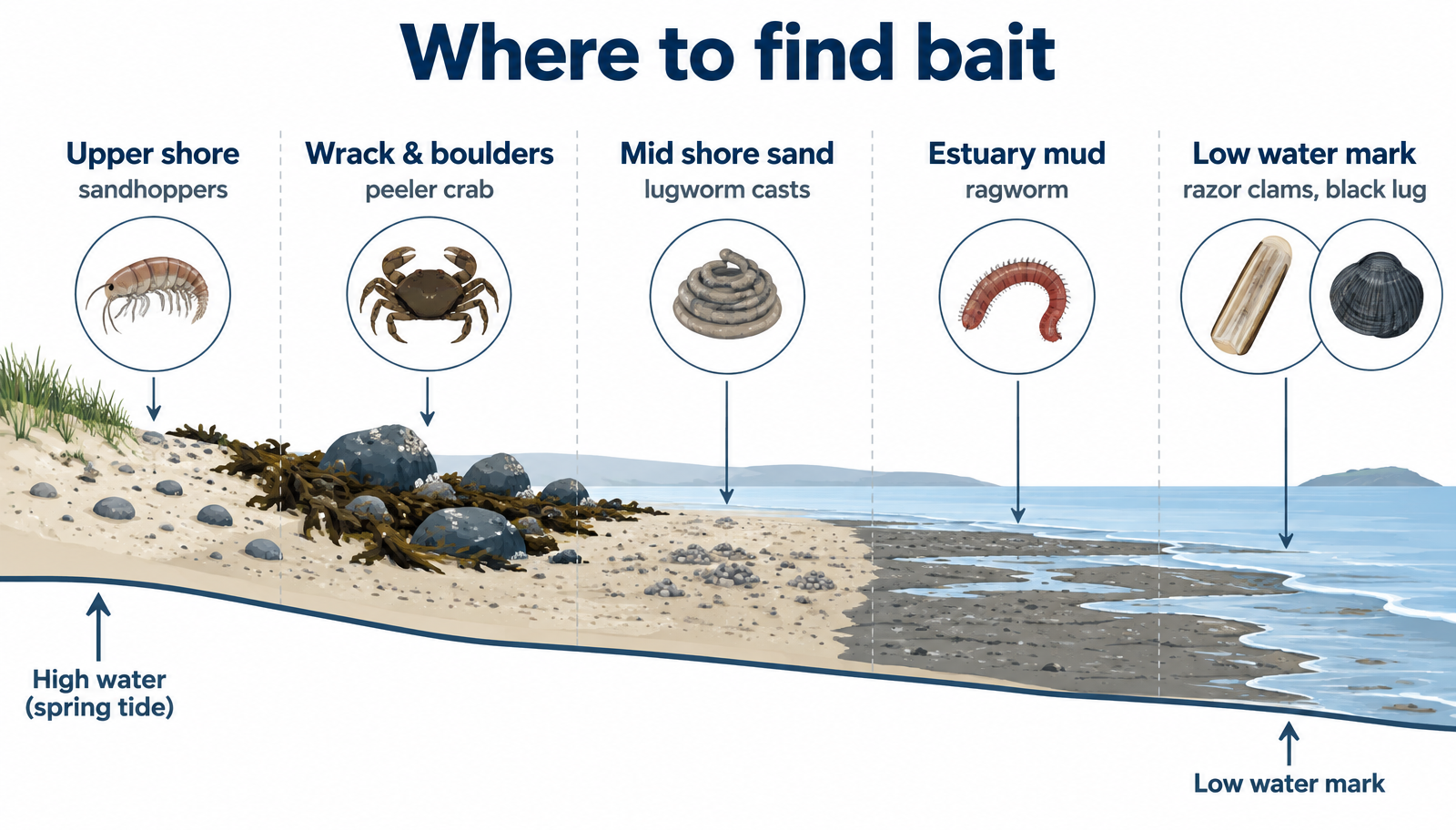
Each bait sits in its own band of the shore. Sandhoppers live along the strandline. Crabs shelter under weed and boulders on the middle shore. Lugworm favour firm, muddy sand from mid-tide down. Ragworm prefer soft estuary mud and gravel under stones. Razors and black lug lie close to the very bottom of the tide, which you'll only reach on big springs.
Look for clues rather than guessing. Coiled worm casts and small blow holes give lug away. Keyhole-shaped holes at the tide's edge mean razors. Weedy boulders resting on sand or mud are where crabs hide.
Tides and timing
Big spring tides (around full and new moon) uncover the lowest ground, and that's where the best razor, black lug and crab ground is. Aim to arrive about two hours before low water and follow the tide out. Leave as soon as it turns. Neap tides are fine for blow lug and ragworm higher up the shore.
Check the tide times for your area on the Tides page before you go. Remember that the water on flat estuaries can return faster than walking pace.
Bait calendar
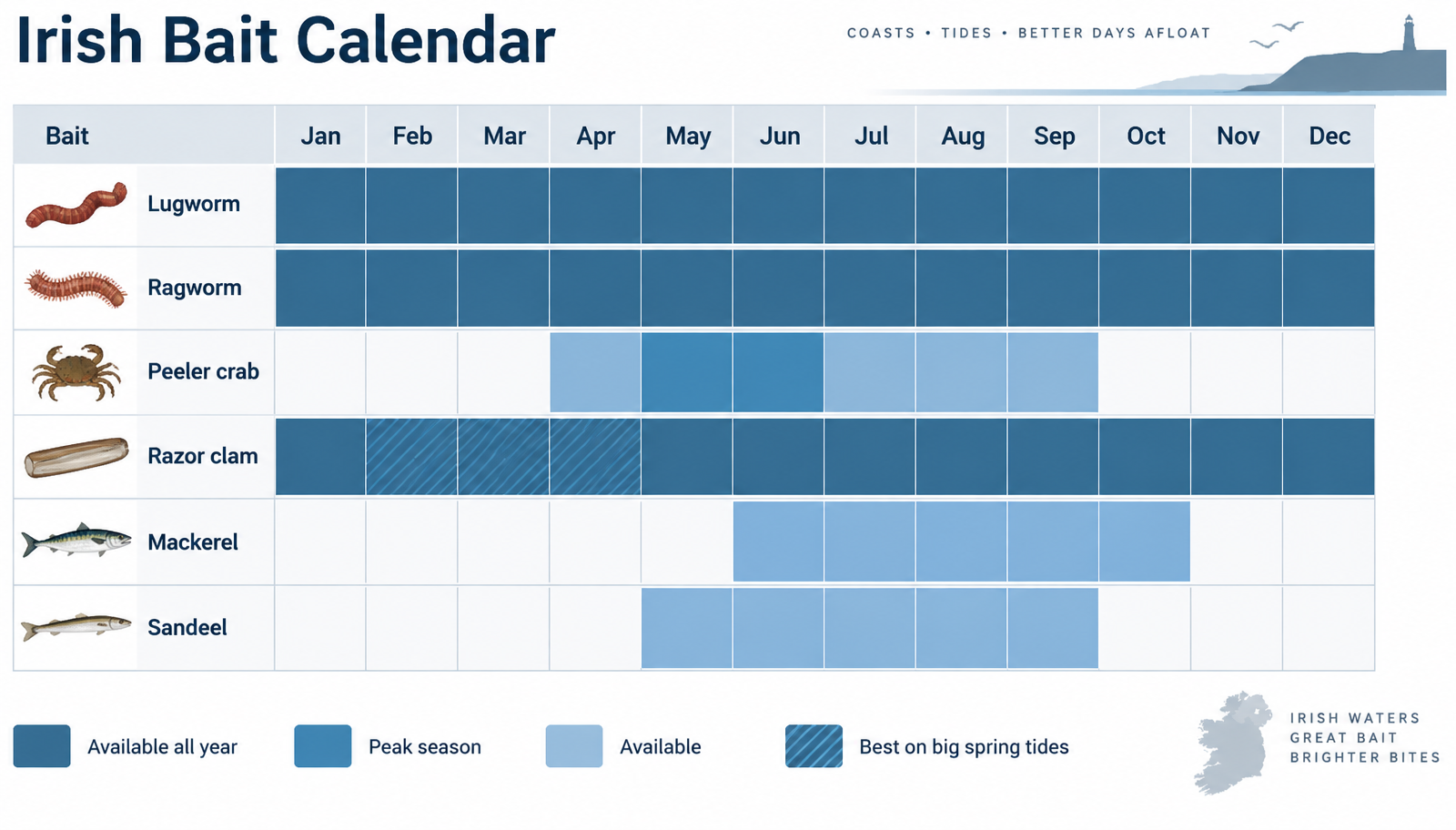
This chart is a general guide to a typical Irish year, not survey data. Worms and razors can be gathered all year. Crab peak in late spring and early summer when the water warms. Mackerel and sandeel arrive in summer and thin out into autumn.
Digging lugworm
Blow lug are found in their thousands on beaches like Dollymount, Sandymount, Rossbeigh and Strandhill-type flats around the country. Each worm leaves a cast at one end of its U-shaped burrow and a small depression (the blow hole) at the other. Dig between the two.
- Use a flat-tined bait fork. A spade cuts too many worms in half.
- Dig fast and turn the sand onto one side so you can see the worm before it retreats.
- Black lug sit deeper and on their own, near low water. Use a bait pump or dig a deep, single trench.
- Backfill every hole. Open trenches are a hazard to others and they damage the bed.
Finding ragworm
Ragworm live in muddy gravel and under stones in sheltered estuaries and harbours. Lift stones, check underneath, then put them back the way you found them. King rag can be big and bite, so handle them carefully. Smaller harbour rag are great on a float for mullet and wrasse.
Collecting peeler crab
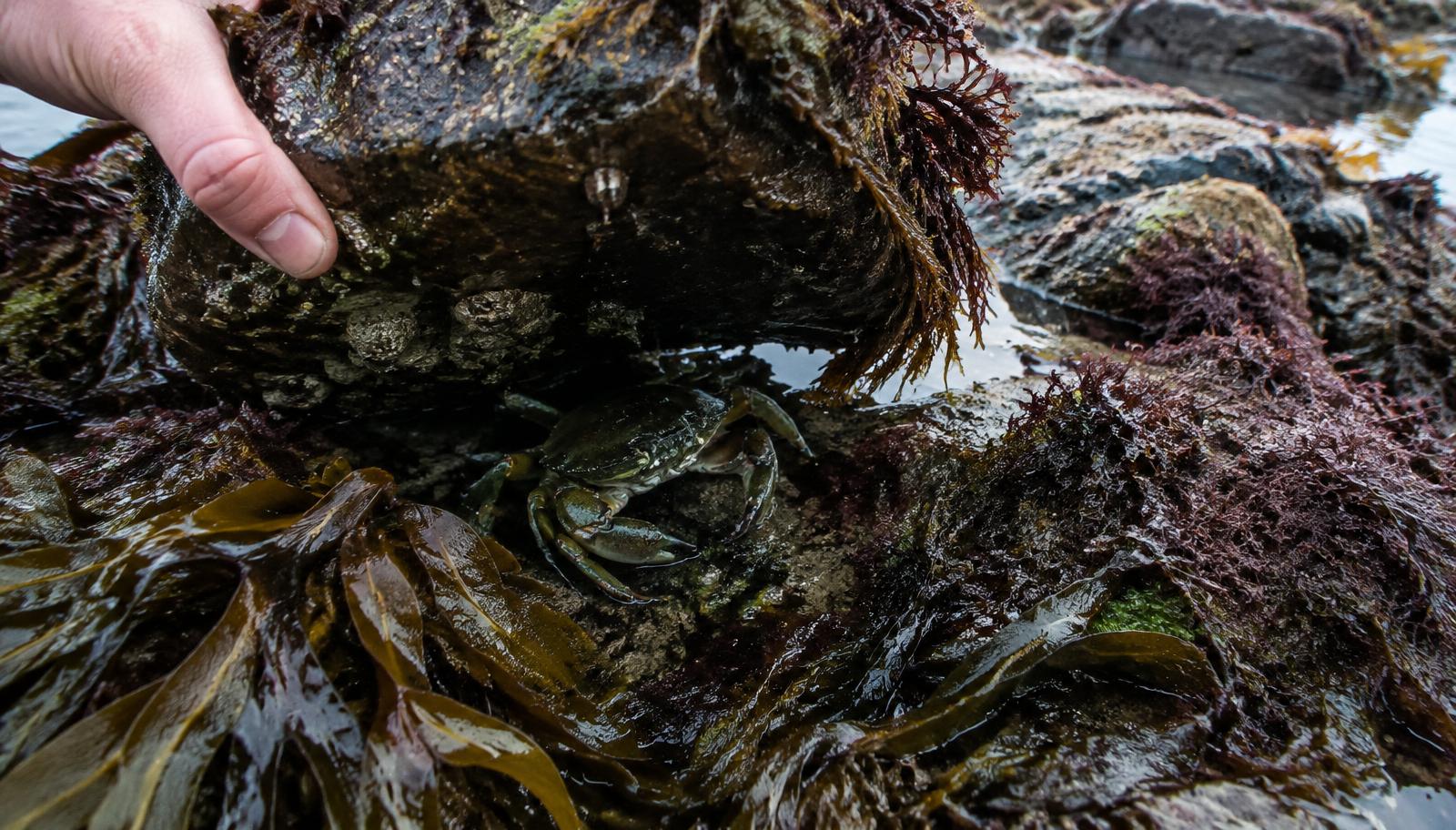
Shore crabs shed their shell to grow. Just before they moult (a "peeler") and just after (a "softie") they're irresistible to bass and flounder. Search under weed and lift boulders on the middle and lower shore, especially from April to July.
- Test a peeler by gently twisting off the last segment of a leg. If it comes away to show soft new shell underneath, it's ready.
- Hard crabs are no good as bait. Put them back.
- Always put rocks back gently and the right way up. The life underneath dies if it's left exposed.
- Crab tiles or pipes laid on mud can work well, but only where they're allowed and won't trouble anyone.
Razor clams
On the biggest spring tides, walk the edge of the water and look for keyhole-shaped holes. Pour a little salt into the hole and the razor will often pop up. Grip it firmly and wait for it to relax before pulling slowly. After winter storms, beaches can be covered in washed-up razors, which make easy free bait.
Mussels, limpets and shellfish
Mussels from the harbour wall make a soft bait that works best tied on with bait elastic. Limpets are tough and stay on the hook in rough water. Take only a few from each spot and avoid gathering near sewage outfalls.
Mackerel and sandeel
From June to October, a string of feathers from the pier will give you fresh mackerel for strips, flappers and whole baits. Sandeel can be raked from clean sand at low water or jigged on tiny feathers in summer. Keep only what you need for the day.
Keeping bait alive
- Lugworm: wrap them in dry newspaper, store them in a cool box or fridge at around 4 to 8°C, and use within two or three days.
- Ragworm: keep them in a tray of clean sea water with an aerator, or in damp vermiculite in the fridge.
- Peeler crab: keep in a bucket of damp seaweed, in a cool place, out of water. Check them daily and remove any that die.
- Razors: wrap them tightly in elastic bands so they don't open, and keep them cool.
- Freeze spares individually in cling film or on a tray, so you can take out just a few at a time.
Rules and access
Bait collection for your own fishing is generally accepted on Irish shores, but there are exceptions. Some areas are Special Areas of Conservation or protected bird feeding grounds, and some beds are on private or commercial foreshore. Commercial shellfish beds and aquaculture sites are off limits.
Check local signs and byelaws before digging, and contact Inland Fisheries Ireland, Sea-Fisheries Protection Authority or the local council if in doubt. In Northern Ireland, check with DAERA. Rules can change, so check the current position before you go.
Shore safety
- Know the tide time and turn back early. Flat estuaries flood quickly and channels fill behind you.
- Watch for soft mud and quicksand, especially near channels and outfalls.
- Tell someone where you're going, take a charged phone, and avoid going out alone in fog or at night.
- Wear proper footwear on weed-covered rocks and lift with your legs, not your back.
Leave it as you found it
Good bait beds last for years when they're treated well. Backfill holes, turn rocks back over, take only what you'll use, and return undersized or hard crabs. Gathering a little less than you think you need is the best way to make sure there's bait there next season.
Comments
Sign in to join the conversation.