
Sea Bass Fishing in Dublin: The Complete Shore Guide
A deep dive into Dublin bass fishing: finding marks, seasonal timing, tides, moon phases, lures, baits and tactics, plus fish care and current Irish rules.
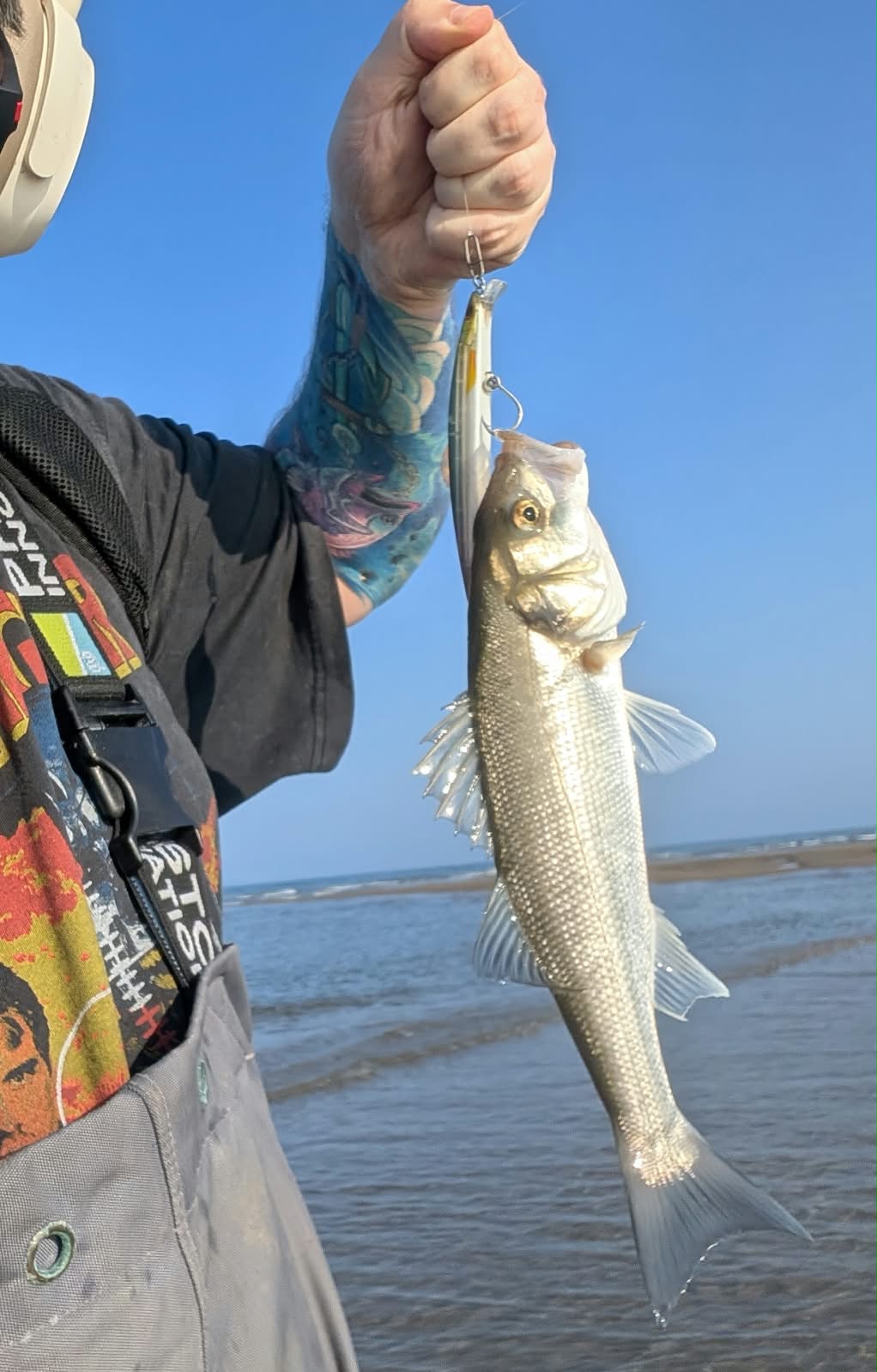
DUBLIN SEA BASS: READ THE WATER BEFORE YOU CAST
European sea bass (Dicentrarchus labrax) are built for the edge: the lip of a surf gutter, a ribbon of current beside a sandbank, the white water around a shallow reef. Dublin offers all of those habitats, but a good bass mark is not simply a beach with a famous name. It is a feeding opportunity that comes alive under a particular combination of water level, current, light, food and safe access.
This guide focuses on finding and fishing your own shore marks around the Dublin coast. The tackle ranges and suggested session windows are starting points, not promises of fish. There is no universal “best tide” or magic moon phase, and no claim here of having personally fished every location mentioned. Work out what happens at your chosen stretch, keep a diary and let repeated observations refine the plan.
1. FINDING A MARK: HABITAT FIRST, PLACE NAME SECOND
Start with broad stretches of coastline rather than somebody else's exact casting spot. North Dublin's coast around Rush, Loughshinny, Skerries, Donabate and Portrane offers a mixture of sand, rocky margins and tide-influenced water. South of the city, Killiney and Shankill provide contrasting open-shore habitat, while the wider Dublin Bay coastline includes extensive sand and estuarine environments. These are areas to investigate, not guarantees of bass or permission to fish every part of them.
A map or satellite image can suggest a sandbar, rock finger or outlet, but it cannot tell you whether the access is public, the ground is safe, a restriction applies or a feature holds feeding fish. Check those things separately. Harbour infrastructure, shipping channels and working piers deserve particular caution; do not assume access because a path appears on a map.
On sandy shores, look for a gutter running parallel to the beach, a gap between bars or a darker channel that remains wet as the tide drops. Bass can patrol surprisingly close to the beach. At low water, sketch where those channels lie, then imagine how the next metre of water will change their connections. Fish the near gutter before firing a bait beyond it.
On mixed ground, look for the boundary between sand and rock, a weed-bed edge or an isolated rock that breaks an otherwise featureless bottom. Food gathers at edges, and an ambush predator does not need a deep offshore reef to use one. Note where a rising tide first puts enough water over the feature to make it fishable.
Around rocky ground, identify submerged gullies and pockets beside current, not just the biggest splash. Breaking water can disguise a bass, but it can also conceal an unsafe ledge. A patch of foam moving steadily past a rock may show a feeding lane; a surging sheet washing over your standing place is a reason to leave.
Where fresh and salt water meet, consider channel edges, seams and nearby beaches rather than blindly casting into the fastest flow. Observe from a secure position. Estuaries can contain deep mud, protected habitats, strong currents and nursery fish; many attractive-looking flats are not suitable places to wade.
Five questions make a useful mark test: What are the bass likely to eat here? Where will that food move? At which water level can bass reach it? Where can I cast without spooking fish or snagging constantly? Can I get back safely if the tide rises faster than expected?
2. RECONNAISSANCE: VISIT IN DAYLIGHT AND AT LOW WATER
Your most productive visit may be the one without a rod. Walk a permitted, safe shoreline in daylight on a falling or low tide. Take photographs of gutters, weed edges and exposed rocks from the bank. Record landmarks so that you can recognise the feature when it disappears underwater; do not rely on a phone signal for the return route.
Look for sandeels or small shoals in shallow water, shrimp in pools, crab habitat, washed-up shellfish and birds repeatedly working the same line. These are clues about food, not proof of bass. Mullet often reveal productive shallow habitat, but a visible shoal of mullet does not mean bass must be feeding underneath it.
Return at two or three stages of tide. Does the gutter fill early or only near high water? Does weed make the flood unfishable? Is the water beside the reef moving on the ebb? Does the beach become a blank sheet of shallow water at full tide? That small investigation is worth more than buying another lure.
Keep exact marks discreet, particularly where the fish are small or access depends on local goodwill. Avoid trampling dunes and saltmarsh, disturbing feeding birds, collecting bait in restricted areas or blocking gates. A productive spot is not a resource to exhaust.
3. THE DUBLIN SEASON: WHEN TO PUT YOUR TIME IN
Treat late spring through autumn as the main planning window, with summer and early autumn sensible priorities for a newcomer. Dublin sits on Ireland's east coast, so advice copied from a sheltered southwest coast does not necessarily describe the same warming pattern, exposure or prey availability.
March and April: think reconnaissance and selective opportunities rather than dependable sport. Cold water and unsettled conditions can make short sessions difficult. A brief warm spell in the air does not instantly warm the sea. Learn a beach and check the current legal rules before planning to retain anything.
May and June: as coastal water warms, explore shallow feeding areas and estuary-adjacent habitat. Longer days give plenty of scouting time, but quieter dawn or evening windows can make busy shores more practical. Fish availability varies between marks and years; do not judge a whole coastline from one blank.
July and August: early mornings, dusk and darkness are useful options on accessible, familiar ground. Clear, still water in bright sunshine often calls for a subtler presentation and less disturbance, not necessarily abandoning the session. Small baitfish can make matching their size more important than throwing the biggest lure in the box.
September and October: often an excellent period to prioritise, with lingering sea warmth, baitfish movement and longer low-light windows. A modest amount of wave action can improve a shallow beach, but autumn weather can turn an exposed shore dangerous quickly. Weed after rough weather may ruin a lure session even when the water looks promising.
November through winter: opportunities may persist, but expect greater variability, colder water and shorter safe weather windows. Do not turn a seasonal generalisation into a reason to stay on a dangerous beach. Check the current year's retention rules as well as the conditions.
The practical lesson is to watch a trend: sea temperature, several days of wind, water clarity, weed and baitfish. A diary showing that your own mark starts producing after a sustained warming period is more useful than an exact temperature copied from the internet.
4. TIDES: WATER LEVEL AND WATER MOVEMENT ARE DIFFERENT
A tide table describes predicted water heights and high/low water times at a reference location. It does not directly tell you when the current beside your rock is strongest. Local channels and headlands can have different timings, and wind and pressure can change the observed level. “High tide in Dublin” is not one feeding alarm that sounds everywhere along the county.
On a shallow beach, try the period when a rising tide first connects a gutter to deeper water. Bass may come in with it to feed over fresh ground. The final two or three hours of the flood and the beginning of the ebb are reasonable trial windows where access allows, not a county-wide rule.
At an estuary-influenced mark, the ebb can carry food outward along a channel edge. Fish the softer seam next to moving water rather than assuming the main torrent is best. The useful window might be well before or after the nearest port's published high water. Work it out through observation from shore, not by entering a channel to test it.
A reef may need a minimum depth to fish safely and effectively. Too little water leaves it dry; too much puts the productive edge beyond your lure's reach. A mid-tide window can therefore beat the very top of the tide. On another rock mark, high water may bring bass into a sheltered pocket right at your feet.
Spring tides have a larger tidal range and occur around new and full moons. They can open shallow feeding ground and strengthen some flows, but also increase weed, turbidity and the risk of being cut off. Neap tides, around the quarter moons, have a smaller range. They may make certain marks easier to fish or keep a useful water level available longer.
Neither is inherently superior. Choose the tide that suits the feature. If a spring tide makes your lure sweep past at an uncontrollable speed, fish a gentler stage or another safe mark. If a neap never covers the feeding shelf, choose different ground rather than waiting for an impossible window.
Use tide predictions for the closest appropriate station, check their datum and confirm times are in Irish local time. In summer, Dublin uses UTC+1; in winter it uses UTC. Do not compare a chart-datum height with a height above mean sea level as though they were the same number. For safety-critical access, check a reliable local source and actual water conditions; an extended modelled chart alone is not enough.
5. MOON PHASE: USE IT AS CONTEXT, NOT A GUARANTEE
The moon's clearest practical role is its relationship with the spring–neap cycle. If you log moon phase, also log the actual tidal range and stage at the mark. Otherwise, you may credit a full moon for a catch that was really about enough water covering a reef.
A bright moon also changes the light available at night, but cloud, water clarity, streetlights and the moon's position all matter. Some anglers favour darker nights for shallow lure work; others catch well under a full moon. Those preferences are not a reliable Dublin-wide forecast.
Do not cancel a promising tide at dawn because an app gives a poor moon score. Nor should a “major feeding period” override a dangerous forecast. Bass do not consult a solunar calendar, and there is no robust basis here for promising that a named phase always produces bigger fish.
A good experiment is to revisit one mark through a full spring–neap cycle while keeping method and session length broadly similar. Record blanks too. Compare catches per hour, water depth, flow and clarity before deciding whether moon phase tells you anything beyond the tide.
6. WEATHER, LIGHT AND WATER CLARITY
A manageable breeze and small amount of surf can help conceal you and stir food on a beach. On Dublin's broadly east-facing coastline, an easterly component can expose many shores to onshore weather, but bays and headlands alter that picture. Evaluate the particular beach, not just the compass letter.
A strong onshore wind may create unsafe waves, suspended weed and water too coloured for effective lure fishing. An offshore wind can flatten a shore, but is not automatically safe for wading or small boats. Swell can arrive from weather far away even when the local wind is light.
In relatively clear water, start with natural baitfish colours, a modest profile and careful presentation. In stained but fishable water, a stronger silhouette or a lure with vibration may be worth trying. In heavily coloured water, a scent-led bait presentation may be more practical than repeatedly changing lure colours.
Dawn, dusk and night reduce light, but daytime bass are entirely possible, especially around white water, cloud cover or a concentrated food source. Pressure alone is a poor reason to predict a catch. Treat it as part of a changing weather pattern, not a magic number.
7. LURE TACKLE: A SMALL, PURPOSEFUL KIT
For general open-shore lure fishing, a rod around 8–9½ ft with a casting range near 10–35 g is a useful starting point, paired with a suitably sized fixed-spool reel, often labelled 3000–4000. Reel sizes differ by maker. A lighter outfit suits sheltered shallow ground; a heavier one may be needed for wind, heavier lures or rougher terrain.
Braid around 15–20 lb and a leader around 15–25 lb are common starting ranges. Choose abrasion resistance for the actual ground and check the leader after every fish or contact with rock. Knot quality and sensible drag matter more than copying a brand or a breaking strain exactly.
Carry a small selection: a shallow-diving minnow, a surface lure, a weightless soft plastic, a lightly weighted weedless soft plastic and a casting lure for deeper or more distant water. Baitfish-style profiles around 90–150 mm cover many situations, but go smaller if bass are visibly chasing tiny prey.
A leader long enough to protect the working end, a reliable clip if you use one and corrosion-resistant hooks complete the system. Consider suitable inline singles instead of trebles where they preserve the lure's action. Barbless or crushed-barb hooks can simplify release, but do not make careless handling harmless.
8. LURE TACTICS: CONTROL DEPTH, SPEED AND ANGLE
Begin quietly and fish close. Stay back from the edge, minimise headtorch light on the water and cast along a gutter before casting across it. Fan your casts to search systematically rather than making twenty identical throws into empty water.
Shallow minnows: choose a diving depth that clears the bottom at the current water level. A steady retrieve, an occasional pause and small changes of pace are usually a better first experiment than constant violent jerks. If the lure repeatedly hits weed or rock, change depth or position.
Weightless soft plastics: useful over shallow rock, weed and calm edges. Fish slowly with pauses, keeping enough contact to detect a take without dragging the lure unnaturally. “Slow” does not mean leaving metres of uncontrolled slack. As current increases, add only enough weight to retain control.
Weedless soft plastics: useful around snags, but weedless is not snag-proof. Cast across or slightly up-current from a safe standing position and let the lure move along the edge. Choose the lightest head that reaches the intended depth; excessive weight buries it into the bottom and dulls the presentation.
Surface lures: try them in suitable shallow, relatively calm water, particularly around visible baitfish or low light. Work a controlled walking or popping action with pauses. If a fish boils behind the lure, resist snatching it away; keep composure and respond once there is weight on the line.
Casting lures and metals: useful when baitfish are farther out or the water is deeper, but distance is not the objective in itself. Count down to test depth, then adjust retrieve speed. Do not let a heavy lure sink blindly into a known snag.
Change one variable at a time: first depth, then speed, then angle or profile. If fish follow without committing, try a pause, a smaller lure or a different angle before cycling through every colour. If there is no sign of life after covering the feature properly, move to another safe piece of water rather than grinding the same patch indefinitely.
9. BAITS: FRESHNESS, PRESENTATION AND POSITION
Peeler crab is a strong option around crab-rich mixed ground and estuary-influenced habitat. Secure it neatly with bait elastic without burying the hook point. Obtain bait legally and respect local collection restrictions; damaging habitat to collect a bucketful defeats the purpose of responsible bass fishing.
Lugworm and ragworm suit sandy or mixed shores, particularly where worms form part of the available food. Build a streamlined bait rather than a tangled mass that spins in the cast. Replace washed-out bait and check frequently for crabs stripping it.
Sandeel and fish baits can make sense where baitfish are present. Fresh or properly stored frozen bait is preferable to repeatedly thawed mush. Fish strips can withstand a cast better than an oversized whole bait, but their scent may attract dogfish and other species as well as bass.
Match the hook to the bait and target, not simply the largest number in the packet. Hooks roughly 1/0–4/0 cover many bass bait presentations, with sizes varying by manufacturer. An exposed point is essential. Suitable circle hooks can help reduce deep hooking when used correctly: avoid a forceful strike and tighten steadily as the fish moves away.
10. BAIT RIGS: KEEP THE SYSTEM SIMPLE
On reasonably clean ground, a single-hook running ledger is a straightforward starting point. Let the trace length and lead weight suit surf and flow. A short, tidy presentation may tangle less in rough water; a longer trace can offer movement in calmer conditions. Neither is a universal answer.
A clipped-down single-hook rig is useful when distance or a stronger cast is genuinely necessary. Use the correct shock leader for your casting weight and style, with suitable knots and components; consult competent local advice if unfamiliar with beachcasting systems. Never cast a heavy lead on an inadequately rated line or use a powerful cast where people are behind you.
Choose enough lead to control the presentation, not the heaviest lead by default. A grip lead can hold in current but may collect weed. A rolling presentation on clean ground can search water, but is a poor choice beside snags or other anglers.
Place the bait in a gutter, beside a channel edge or where water is bringing food past. Fish a near rod before assuming you need maximum range. Stay with the tackle, watch bites and retrieve promptly to reduce the likelihood of deeply hooked fish. If weed loads the line continuously, change location or tide stage rather than accepting an unfishable presentation.
11. A SESSION PLAN THAT TEACHES YOU SOMETHING
Example A — a shallow summer beach: scout the gutter in daylight, then return for a safe rising tide overlapping dawn. Fish the near edge first with a shallow minnow or weightless plastic. Move progressively along the accessible beach, noting the water level where follows or takes occur. If conditions suit bait better, place a tidy worm bait in the same feature.
Example B — an autumn mixed-ground shore: pick a familiar mark with manageable wave action, a clear escape route and enough depth over the reef. Try the sand–rock boundary with a weedless plastic, then a shallow minnow through the cleaner lane. If weed or surge prevents control, stop or move; it is not a test of determination.
Example C — a tide-influenced channel margin: observe flow from firm, permitted shore. Try the seam carrying prey on a safe ebb window, allowing a light soft plastic to swing along the edge. Do not wade toward faster flow, cross soft flats or remain on ground that the next flood will isolate.
For each session, choose a single question: Does this gutter fish before high water? Does a smaller plastic improve follows? Is the ebb cleaner than the flood? A focused blank still answers something; a random session often does not.
12. THE DIARY: BUILD YOUR OWN DUBLIN PATTERN
Record date, start and finish time, broad area, exact mark privately, method, bait or lure, size, retrieve and catches. Add water clarity, floating weed, wave conditions, wind direction, recent weather, observed baitfish and where the fish took. Measure length on a wet mat if it can be done quickly; weighing a fish is not essential.
Log predicted tide stage and range as well as actual conditions. Note moon phase, but avoid treating it as the explanation before comparing the other variables. Automatically recorded weather describes the source's location and resolution, not necessarily the water at your feet. Regional sea temperature is useful context, not a direct thermometer reading at your mark.
Record every blank and the hours fished. Ten catches from twenty visits are not the same pattern as ten catches from two visits. After a season, compare similar marks and similar effort. That is how a vague “bass like autumn springs” becomes a useful observation such as “this shallow gutter gave most takes during the first hour it filled, in moderate clarity”.
13. CONSERVATION AND FISH HANDLING
Bass are slow-growing fish, and a large individual represents many years of survival. Choosing catch-and-release, especially for bigger fish, is a sensible conservation approach even when legal retention is available. If repeated captures are all small juveniles, change spot rather than continuing to work a nursery shoal.
Have pliers, a wet measuring mat if needed and the camera ready before landing a fish. Wet your hands, support the fish horizontally with one hand under the belly and keep it close to the water. Do not suspend it by the line, lure or jaw, place it on dry sand or hold it upright for a long photo session. Avoid the gills and take care around the dorsal spines and hooks.
Unhook in the water where safe, and keep any time out of water brief. If a hook is deeply embedded and removal would cause serious injury, cutting the trace close rather than forcing it out can be the better option. Release in a safe, sufficiently deep area, allowing the fish to recover upright; do not drag it backwards through the water or throw it from a high wall. Choose a landing position before making the first cast.
14. REGULATIONS: CHECK THE CURRENT YEAR BEFORE FISHING
The following is the 2026 recreational summary displayed by Inland Fisheries Ireland's Fishing in Ireland bass page, checked on 16 October 2026. It is not a substitute for current legislation or local restrictions:
• 1–31 January 2026: a two-fish bag limit, with a minimum size of 42 cm. • 1 February–31 March 2026: catch-and-release only; no retention. • 1 April–31 December 2026: a two-fish bag limit, with a minimum size of 42 cm.
Source: https://fishinginireland.info/sea/bass-2/
Do not use those dates as the rules for a later year. Nor should you copy the old Irish 15 May–15 June bass closure from historic articles without checking current guidance: the current IFI 2026 summary above does not list that old closure. If you encounter conflicting information about a closure or bag limit, obtain confirmation from IFI before targeting or retaining bass. Some websites quote EU allowances without explaining Ireland's rules; use the Irish authority's current advice for a Dublin session.
Bass are specifically protected under Irish legislation, and Irish-caught bass must not be sold or offered for sale. The SFPA lists the relevant conservation and sale restrictions, while IFI is the responsible agency for recreational sea fishing. Rod-and-line sea angling for bass generally does not require a State fishing licence, but that does not grant access to private land or override local restrictions. Salmon and sea trout have separate licensing and conservation rules; do not confuse them with bass.
Official references: https://www.sfpa.ie/FAQs/Recreational-Fishing https://fishinginireland.info/regulations/ https://www.sfpa.ie/What-We-Do/Sea-Fisheries-Information/Fishery-Information-Notices
15. DUBLIN SAFETY: DO NOT LET A BASS CHOOSE YOUR EXIT
A wide, dry strand can be misleading. Water can fill a channel behind you before it reaches the sandbank you are standing on. Dublin Bay's tidal flats, including Sandymount, have a history of people being cut off. Stay on safe, familiar, firm shoreline; do not venture out across flats or channels just because other people are doing it.
Check tide times and the weather before leaving, then keep watching the actual water. Decide your latest return time in advance and allow a margin. An alarm helps, but it cannot make an unsafe route safe. Have an alternative exit that you have checked in daylight, not one inferred from a satellite image.
On rocks, avoid swell-exposed ledges, cliff descents and places requiring a scramble beyond your ability. Wear suitable non-slip footwear and a properly fitted lifejacket or appropriate flotation aid, and fish with someone else. A landing net or lure is replaceable; do not reach into surge or descend to retrieve one.
Night fishing should begin only on ground you already know well. Carry a headtorch and backup, a charged phone protected from water, warm layers and a small first-aid kit. Tell someone where you are going and when you will return. Waders do not make channels safe, and a wading belt is not a substitute for flotation, a safe route or sound judgement.
For a coastal emergency, call 112 or 999 and ask for the Coast Guard. Give your location as clearly as possible. Do not enter the water to recover tackle or attempt an untrained rescue.
Protected habitats also matter. North Bull Island and the wider bay contain internationally important bird habitat, dunes, saltmarsh and tidal flats. Follow local signs and access advice, keep away from wildlife and leave no line, bait packaging or hooks behind. A nature designation does not by itself prove a blanket fishing ban, but it is a reason to check the specific rules rather than assume unrestricted access.
16. COMMON MISTAKES THAT COST MORE THAN THE WRONG LURE
Casting too far: bass can be feeding in the first gutter while your bait sits beyond the useful ground. Search close first.
Arriving at “high tide” without knowing the feature: a flooded reef, a beach gutter and an ebbing channel can have entirely different windows. Learn the water level that matters locally.
Fishing only perfect-looking weather: bright, flat water can demand stealth; modest surf can help; truly rough conditions demand staying away. Appearance alone is not a catch forecast.
Changing everything at once: if lure, depth, retrieve and spot all change, you learn very little about what worked. Make deliberate adjustments.
Ignoring weed and clarity: a good calendar date cannot rescue a lure that is towing weed on every cast. Choose a cleaner, safe shore or another method.
Trusting moon scores over observations: food, access, current and light at the actual mark take priority over a generic app rating.
Taking too much tackle and too little safety equipment: a few well-chosen lures, sound hooks, pliers and a safe landing plan are worth more than a bag full of unused options.
Only recording successes: blanks are the denominator. Without them, a diary turns into a highlight reel instead of a tool for finding patterns.
THE TAKEAWAY
For a first serious Dublin bass campaign, choose two accessible marks with different habitat: perhaps a sandy beach and a safe mixed-ground stretch. Scout both at low water in daylight. Prioritise summer and early autumn, sample more than one tide stage, and start with a small set of lures or one well-presented bait rig. Revisit the productive window instead of chasing rumours every week.
The best mark is not necessarily a secret place. It is a place where you understand what changes as the tide moves, where the food travels, how to present to it and when to leave. Get those decisions right, and the moon phase and lure colour become useful details rather than the whole plan.
FURTHER READING AND SOURCE NOTES
Regulations above are drawn from IFI's current 2026 bass summary and the SFPA recreational fishing information. Biology and nursery conservation context are supported by IFI's bass species information and National Bass Programme. Seasonal priorities, tackle ranges and presentation advice are practical angling starting points, not quantified scientific predictions for individual Dublin marks. Broad place names are reconnaissance areas, not verified catch reports or an access guarantee.
IFI bass species and biology: https://www.fisheriesireland.ie/fish-species/bass-dicentrarchus-labrax
IFI National Bass Programme: https://www.fisheriesireland.ie/research/national-bass-programme
IFI bass angling information and 2026 rules: https://fishinginireland.info/sea/bass-2/
SFPA recreational fishing and protected-species legislation: https://www.sfpa.ie/FAQs/Recreational-Fishing
NPWS North Dublin Bay protected-site information: https://www.npws.ie/protected-sites/sac/000206
Dublin City Council North Bull Island visitor information: https://www.dublincity.ie/parks-and-nature/dublin-city-parks/visit-park/north-bull-island
Editorial note: prepared with AI assistance and checked against the sources above on 16 October 2026. This is a general guide, not a claim of first-hand experience at every named location. Check updated regulations, local access, tides and weather before every session.
Comments
Sign in to join the conversation.